

Sound / Research draft
Defining events for transport sounds
OTI's sound study distinguishes network identity, attention cues and information about an event. Its proposed record identifies the confirmed event and essential message before attaching an optional sound.
Selected findings
Documented uses of sound
The cases include network signatures, attention cues, spoken information and operational signals. The study distinguishes their purposes and stated meanings.
Speech and local conventions
RATP describes intonation differences for approach and arrival. TransLink documents rising tones for closing doors; that history gives the contour a specific local context.
Access to the message
The study separates recognition of a cue from receiving the essential message and completing a passenger task. These require different evidence.
From evidence to design
OTI proposals
A confirmed event record
Connect state, relevant service, time, validity and essential message before attaching a sound.
Candidate cue families
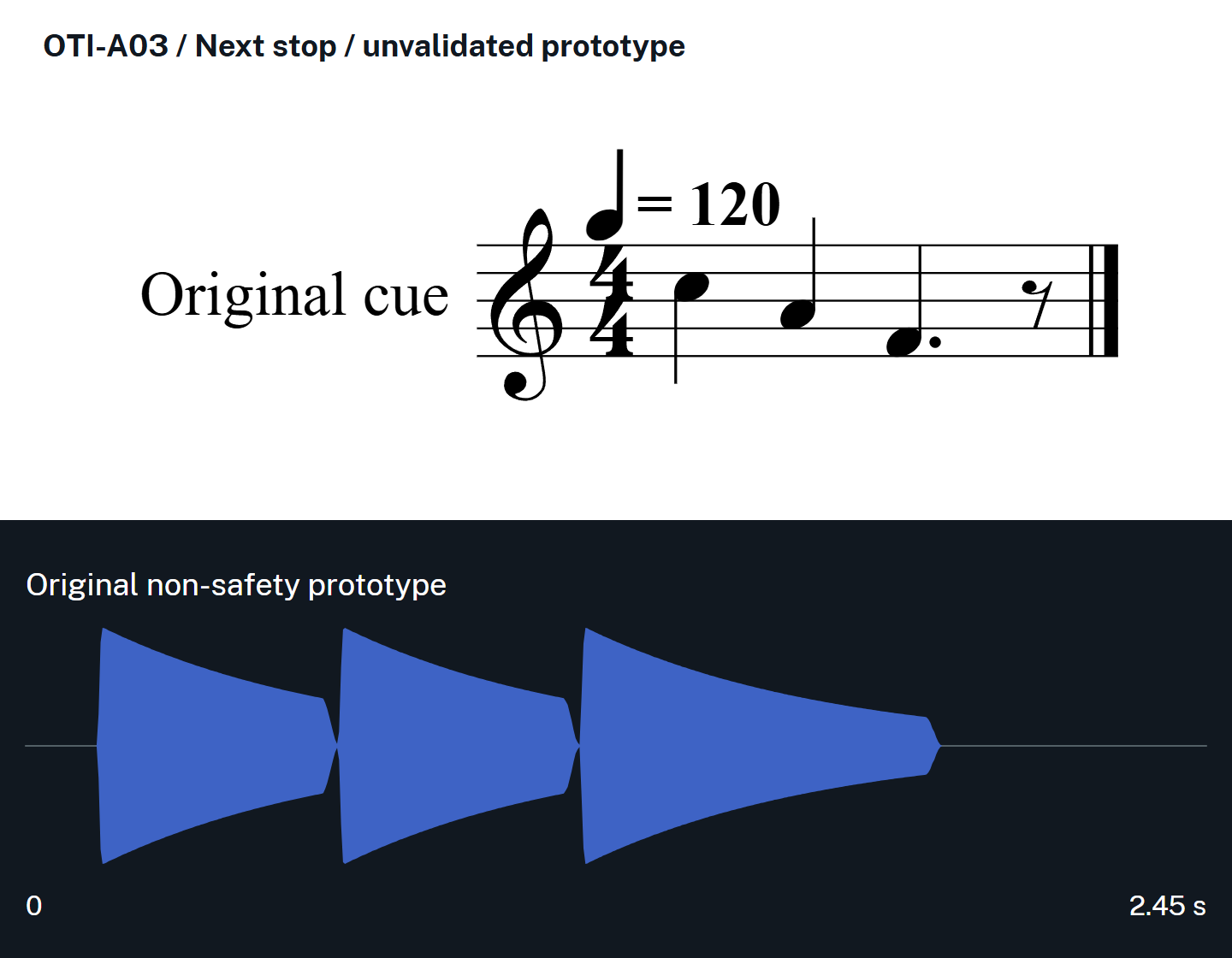
Contour, Pulse and Voicing explore five non-safety meanings. The research includes a neutral cue and proposes a comparison with no added cue.
Musical and task evaluation
Review the music and prepare comparisons of correct action, message access, learning and repeated exposure before field use.